studiofreunde
Minimal Interventions. Enduring Spaces.
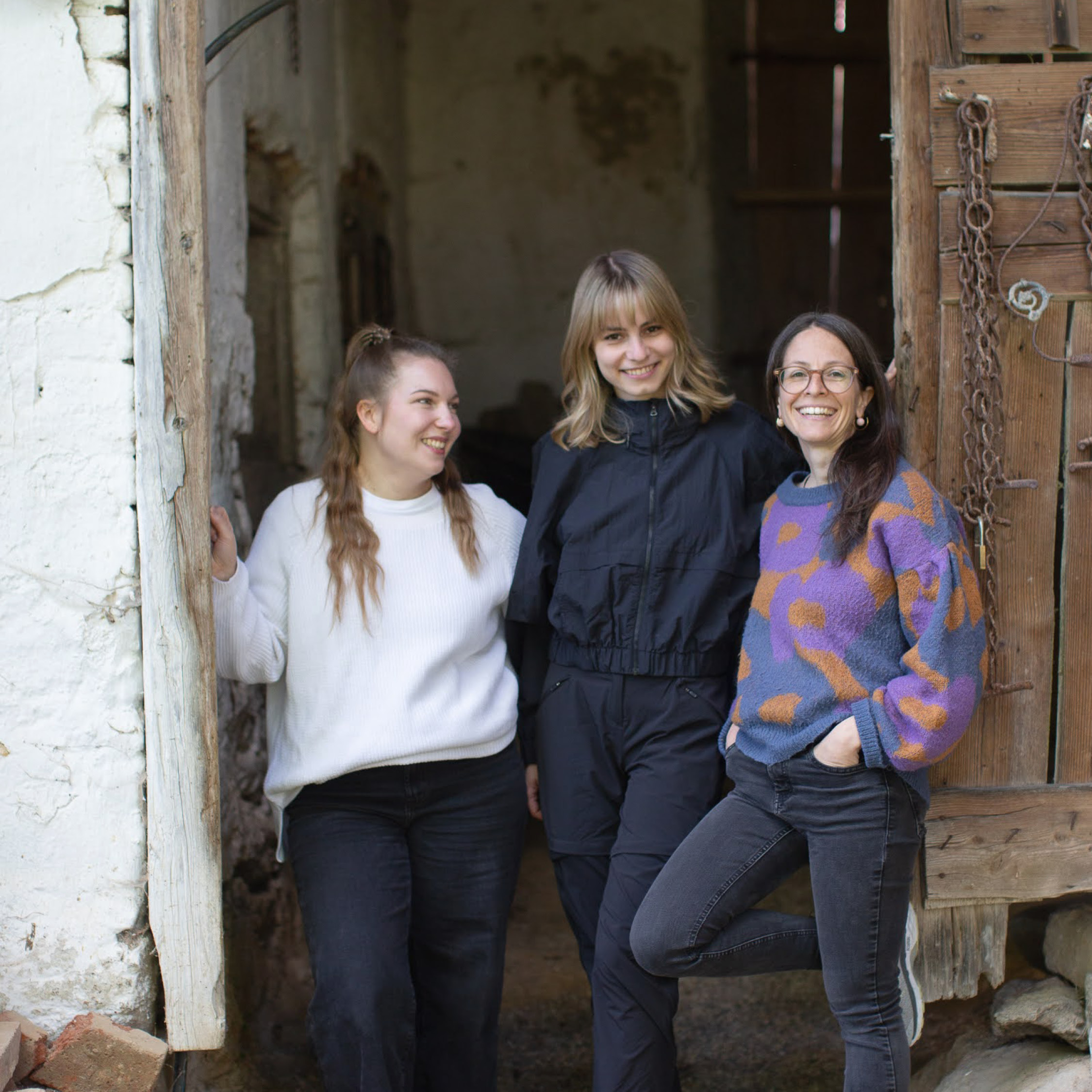
MAIGN Work in Progress
Renovation of a heritage-listed Bavarian farmhouse
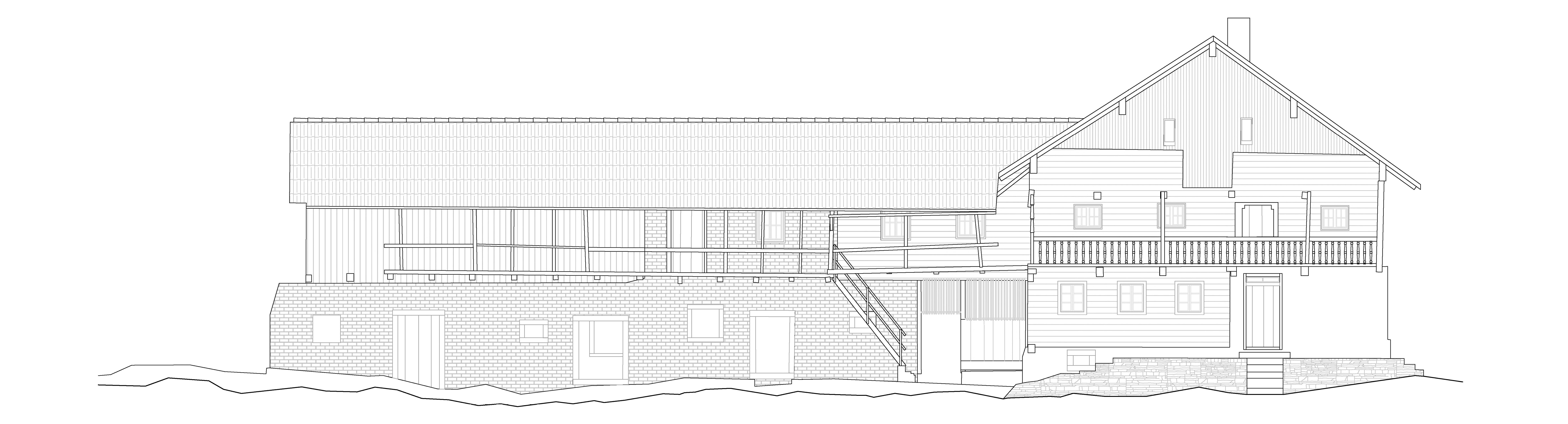
At the edge of the forest stands an 18th-century Bavarian farmhouse – a quiet, powerful structure whose everyday life once naturally combined living and working under one roof. The heritage-listed front building housed bedrooms, dining room, and attic; the kitchen was divided: towards the stable side the slaughtering area, closer to the dining room the cooking area. This spatial logic tells of proximity, of pathways, of smells and temperatures – and of how precisely architecture was once anchored to use and material.
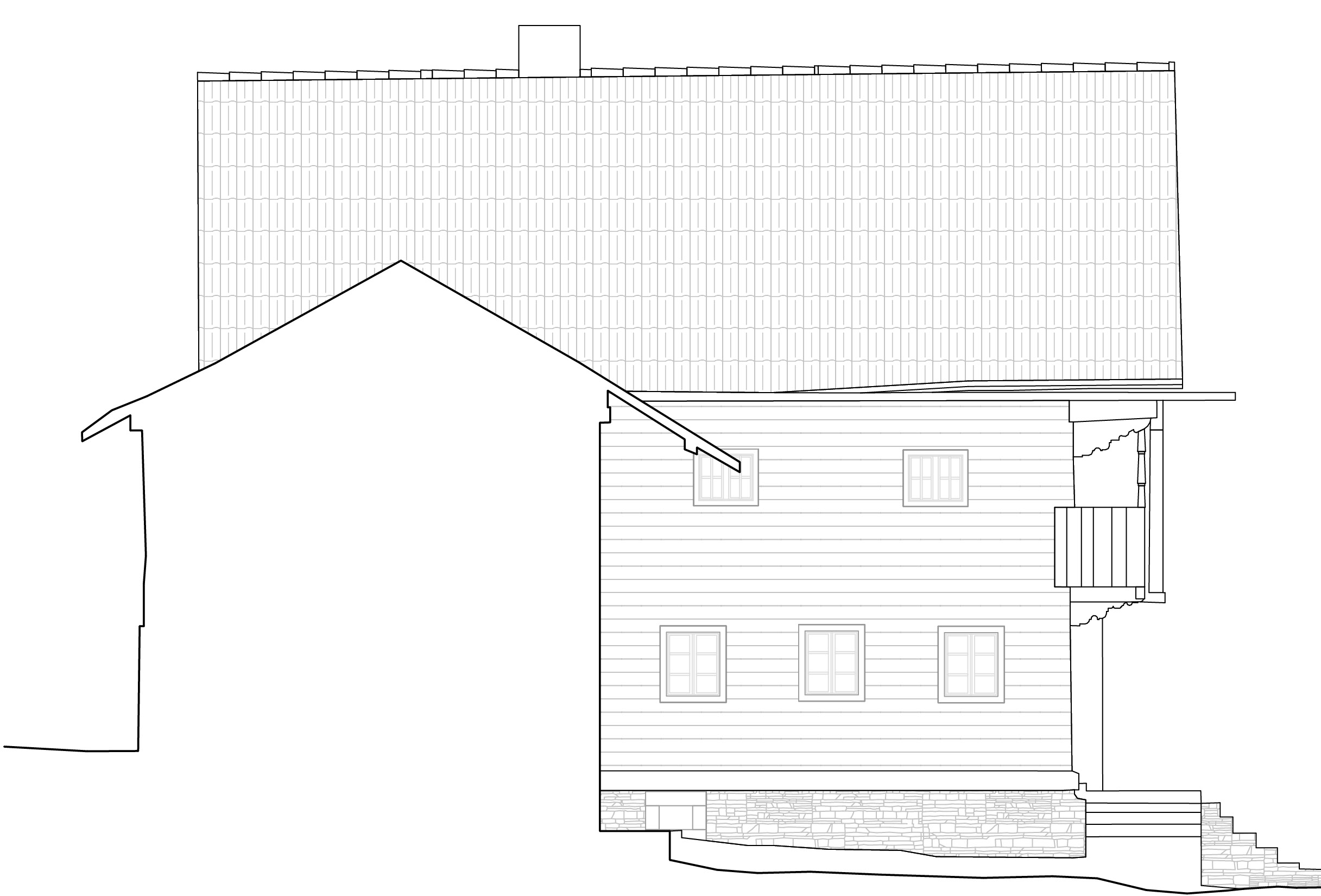
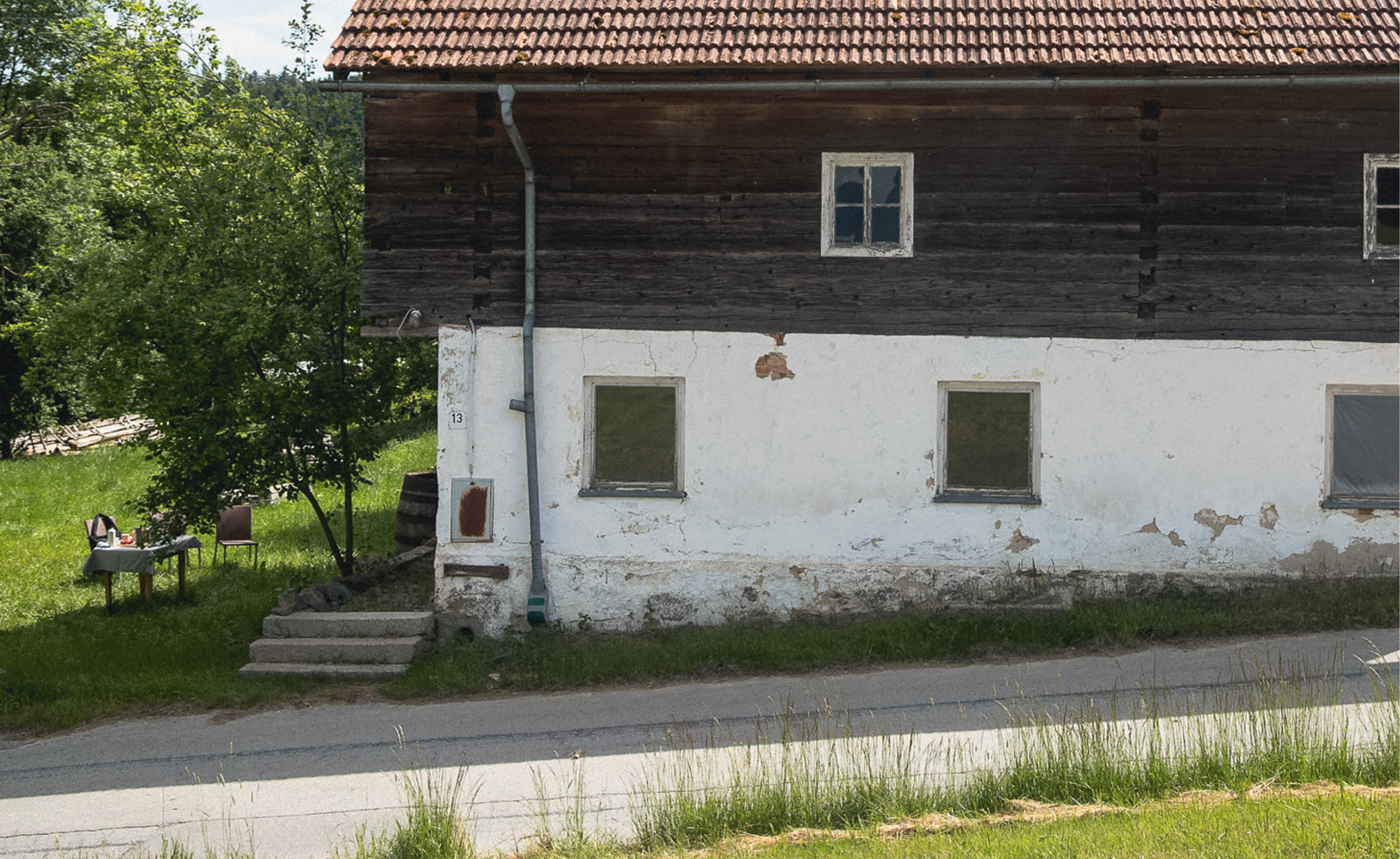
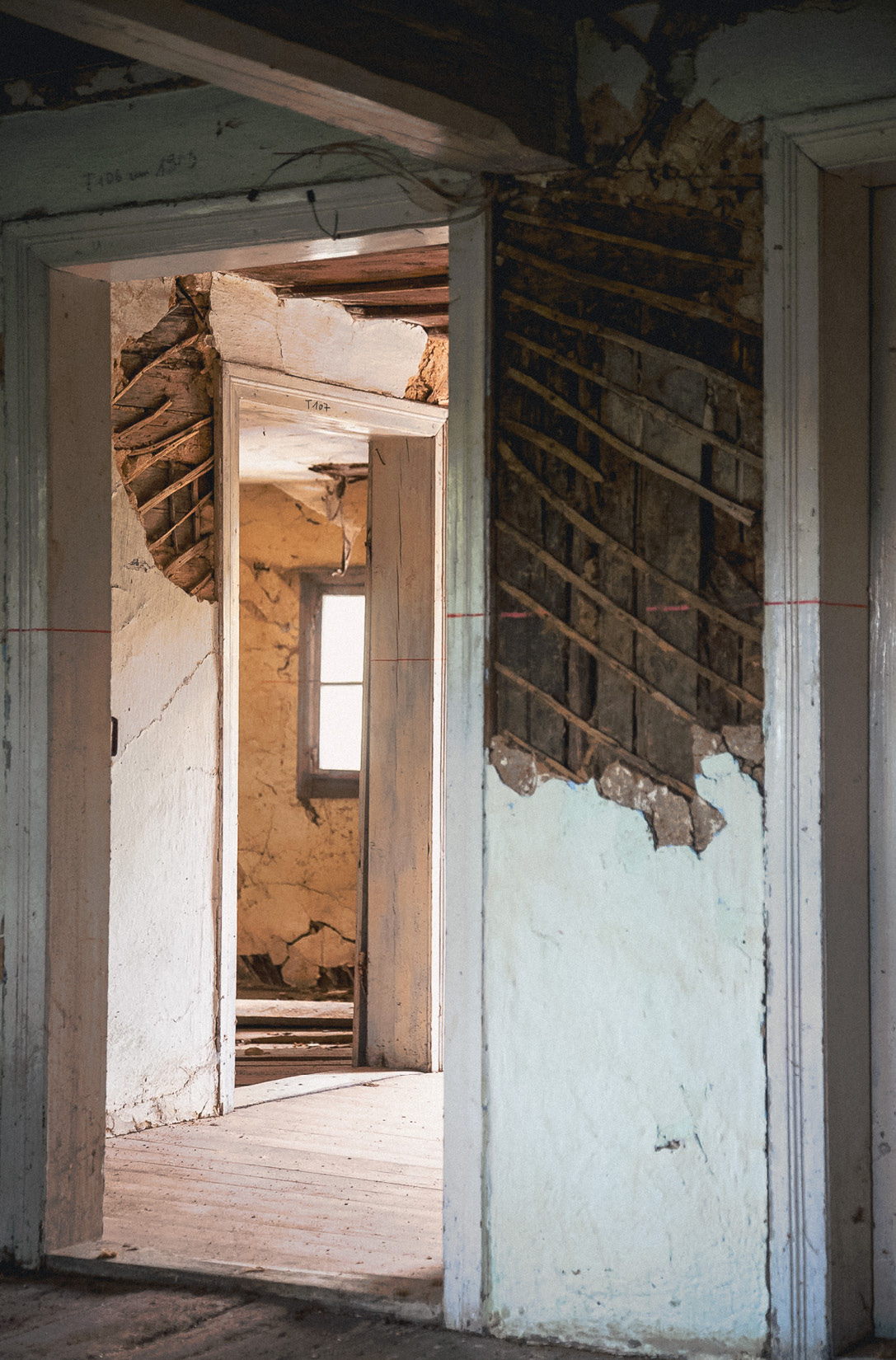
Today, the front building is being carefully renovated and developed into a contemporary two-family house. Our approach: not to "transform", but to read, understand, and continue writing. The renovation takes vernacular construction seriously – it originates from a time when material knowledge and natural building materials were not optional, but necessary. In the layers of the existing structure lies building knowledge that becomes tangible again in the design process: wood that breathes; clay that buffers moisture; reed as plaster support. In the interior, this principle is evident in the historical bonding layer: small wooden pieces (stakes), nailed as supports for clay, which protects the wood from moisture penetration while creating a suitable base for the plaster application – a robust, capillary-active alternative to today's composite constructions.
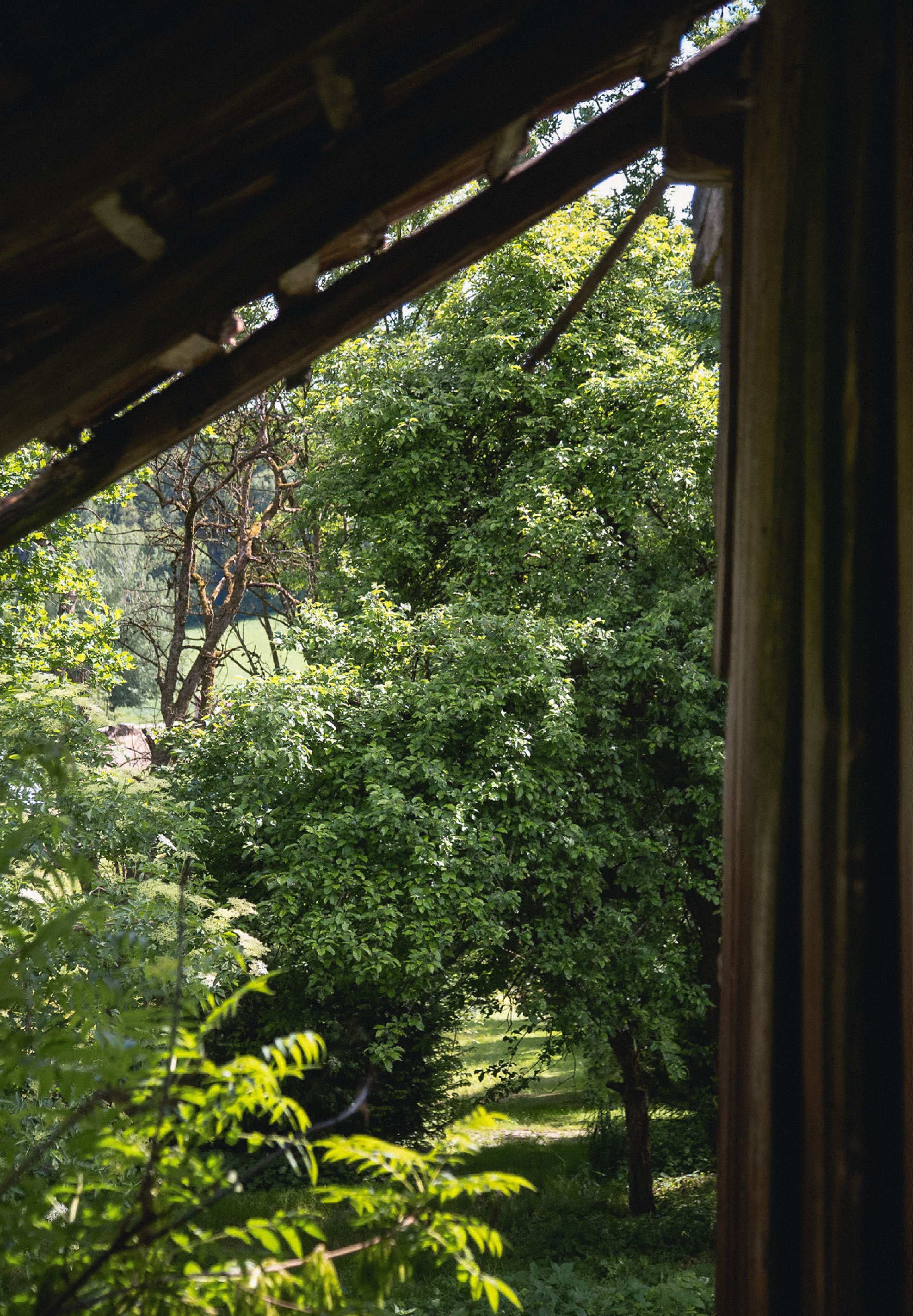
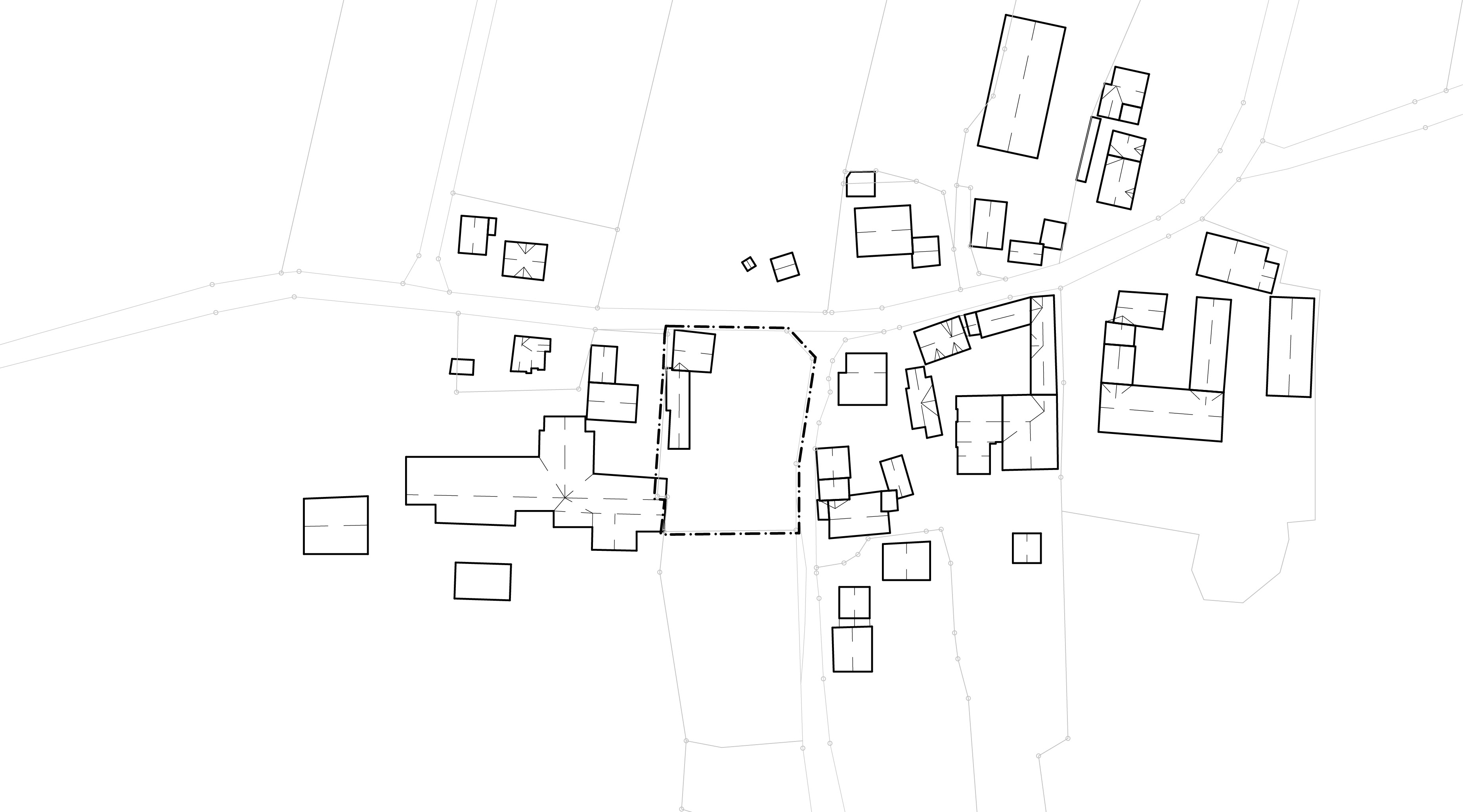
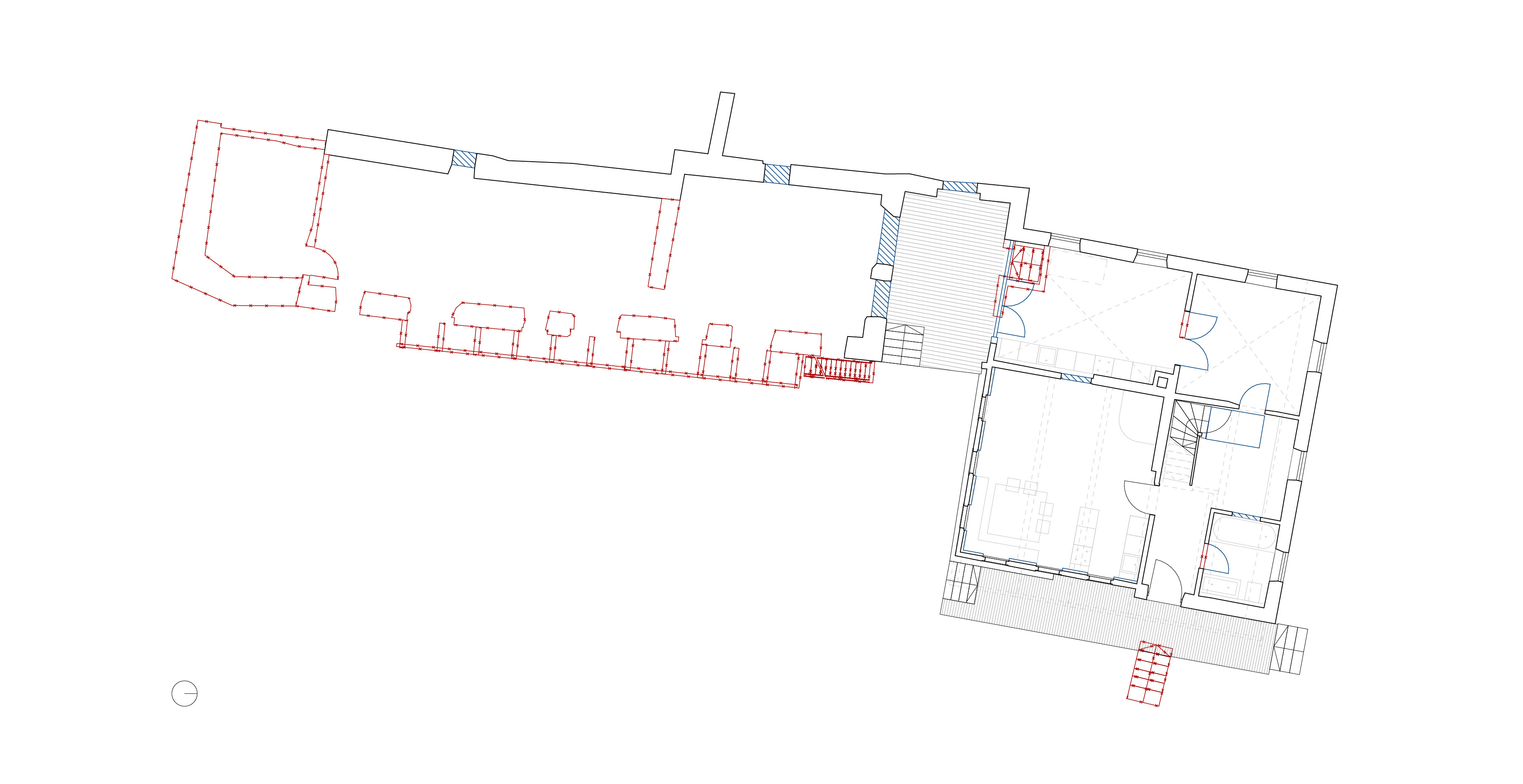
Load-bearing building fabric is secured and repaired through reconstructive measures. Sensitive interventions create new spatial qualities – more light, better access, contemporary livability – without losing the character of the house. The new is not louder than the old, but in harmony.
During project development, it became clear: the fabric of the stable extension is no longer structurally sound; the masonry crumbles at the slightest touch. This part will be reconceived as a second construction phase: an extension that opens the massive log house towards the overgrown greenery – with a light, permeable construction and direct relation to the outdoor space. Thus, from the ensemble emerges an expanded living space: with the past into the future – not as a backdrop, but as lived continuity.